

What OEM Buyers Get Wrong About Microneedling Pen Tooling Costs
Quick answer
A buyer from Melbourne walked through our tooling workshop last month. He had budgeted 12,000 dollars for molds. By the time we finished the tour he understood why the actual number was closer to 28,000. The difference came from things most first...
Key checks
- Define the target market, product configuration, and expected order volume.
- Confirm sample, tooling, pilot production, and mass production stages.
- Treat OEM/ODM MOQ as project-specific; sample orders are supported.
Best next step
Review the related TBPHP commercial page, then send your target market, estimated volume, branding, and packaging requirements for a project-specific answer.
Common buyer questions
What is the OEM/ODM MOQ?
Sample orders are supported. OEM/ODM MOQ varies by product configuration, packaging, and project scope.
Are samples available before a production order?
Yes. Sample development is the first practical step before tooling or mass production.
How long does a full custom project take?
A full custom project is typically 13-19 weeks, depending on specification, tooling, approvals, and production scheduling.
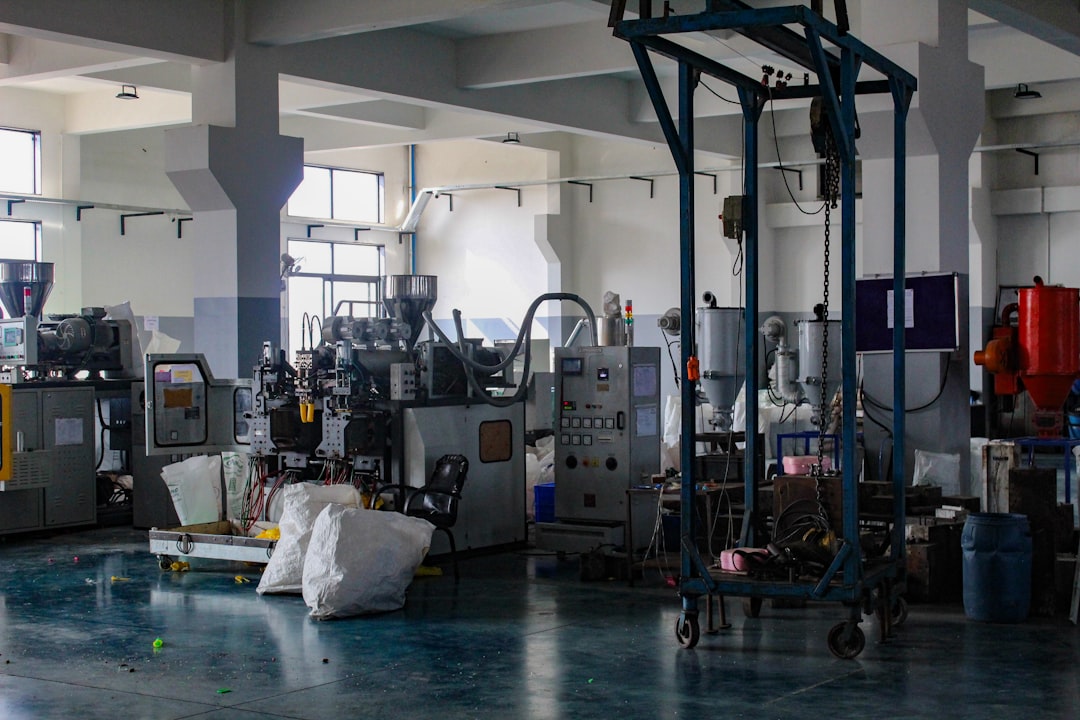
A buyer from Melbourne walked through our tooling workshop last month. He had budgeted 12,000 dollars for molds. By the time we finished the tour he understood why the actual number was closer to 28,000. The difference came from things most first time buyers never think about.
I have worked on over 80 OEM tooling projects in the past five years. The same pattern appears every time. Buyers focus on per unit price and assume tooling is a fixed one time cost. It is not. The tooling decisions you make today affect every cartridge you produce for the next three to five years.
Tooling Cost Breakdown Most Buyers Miss
A single cavity injection mold for a standard pen handle costs 6,000 to 10,000 dollars in P20 steel. Upgrade to H13 steel for longer tool life and the price jumps to 12,000 to 16,000 dollars. Then you need separate molds for the cap, the button, and the cartridge housing. A complete four mold set runs 25,000 to 40,000 dollars.
Surface finish is the line item people overlook most often. A textured grip requires electrical discharge machining EDM. A high gloss finish needs polished cavity surfaces. Each extra step adds 2,000 to 5,000 dollars to the tooling total. I had a buyer who wanted a matte finish with a soft touch coating. That single decision added 3,800 dollars and two extra weeks to the tooling schedule.
Mold maintenance is another ongoing cost. After 50,000 cycles the cavity surface needs re polishing. After 100,000 cycles the ejector pins need replacement. Budget 1,000 to 2,000 dollars per year for mold maintenance depending on production volume. tbphp handles all routine mold maintenance for OEM clients at no extra charge during the first 12 months.

Material Grade Changes Every Cost Assumption
Medical grade polycarbonate costs 3.50 to 5.00 dollars per kilogram. ABS plastic costs 0.80 to 1.20 dollars per kilogram. The difference looks small but at 10,000 units it adds up to 30,000 to 40,000 dollars in material cost alone.
The bigger problem is regulatory. ABS does not pass ISO 10993 biocompatibility testing. A client from Spain learned this the hard way. He approved ABS to save 4,000 dollars on the first batch. His notified body rejected the file. He spent 6,000 dollars on replacement molds and lost 10 weeks of market time.
Medical grade polycarbonate also handles EO sterilization better. ABS can become brittle after repeated sterilization cycles. Polycarbonate maintains its impact resistance for the full product lifespan. We tested both materials side by side in our lab. After three sterilization cycles ABS lost 23 percent of its impact strength. Polycarbonate lost 4 percent.
tbphp only uses medical grade materials certified per ISO 10993 for all OEM projects. The material certificate and batch traceability report are included with every shipment. No exceptions.
| Cost Component | Range USD | Notes |
|---|---|---|
| Single cavity mold P20 steel | 6,000 – 10,000 | Standard handle |
| Single cavity mold H13 steel | 12,000 – 16,000 | High volume runs |
| Complete 4-mold set | 25,000 – 40,000 | Handle + cap + button + cartridge |
| Surface finish EDM | 2,000 – 5,000 | Texture or gloss |
| CE documentation package | 8,000 – 15,000 | Notified body fee |
| EO sterilization validation | 2,000 – 4,000 | Initial batch only |
| Annual mold maintenance | 1,000 – 2,000 | Polishing + pin replacement |
| FAIR first article inspection | 500 – 1,500 | 5-7 business days |
Sterilization Validation Cannot Be Skipped
EO gas sterilization validation costs 2,000 to 4,000 dollars for the initial batch. Ongoing sterility testing adds 300 to 500 dollars per production run. These numbers are small compared to the cost of a recall.
We audited 14 cartridge suppliers in 2025. Only 5 could produce a complete sterilization validation file including biological indicator results and dose audit data. The other 9 either had incomplete records or refused to share them. That means over 60 percent of suppliers in the market cannot prove their products are sterile.
Sterilization validation is not a paperwork exercise. The biological indicator test uses Geobacillus stearothermophilus spores placed inside sealed cartridges. After the EO cycle the spores are cultured to confirm they were killed. If even one spore survives the batch fails and the process must be re validated. tbphp runs this test on every sterilization batch and shares the results with OEM clients within 48 hours.
Without validated sterilization you cannot sell in the EU, the UK, Australia, or most of Asia. Skipping this step limits your market to unregulated regions where margins are lowest.
First Article Inspection Saves Money Later
First article inspection is the step most buyers skip. After the mold is cut and the first samples are produced we run a full FAIR. Critical dimensions are measured and recorded. Needle exposure depth, cartridge fit tolerance, handle assembly force, and button actuation pressure. Each measurement is compared to the specification.
Out of spec items are flagged and corrected before production starts. A proper FAIR takes 5 to 7 business days and costs 500 to 1,500 dollars. It is the cheapest insurance against a bad production run. One client skipped the FAIR to save 800 dollars. The first production batch had misaligned needles in 12 percent of units. The entire batch was scrapped. Total loss was 18,000 dollars.
Liu Wei, our production manager who has managed 60 plus OEM tooling projects, put it this way: “A tooling decision made in week one affects product quality in year three. Buyers who rush the mold design stage always come back asking for changes later. Changes that cost time and money.”
If you are planning your first OEM project, read our guide on what to expect during a microneedling pen factory audit. It covers the quality checks you should request during a supplier visit.
For a breakdown of per unit pricing at different volumes, see the real cost drivers in microneedling cartridge OEM pricing.
Frequently Asked Questions
What is the biggest hidden cost in OEM microneedling pen production?
Tooling. Most buyers underestimate mold costs by 40 to 60 percent because they do not factor in multiple cavities, surface finish, and steel grade.
How long does mold development take?
4 to 8 weeks for a single cavity mold. Multi cavity or complex molds take 8 to 12 weeks.
Can I use ABS instead of medical grade polycarbonate?
No if you need CE or UKCA marking. ABS lacks ISO 10993 biocompatibility data.
What documents should I request from an OEM supplier?
quality management system certificate, sterilization validation report, material certificates, and recent batch records.
How much does a complete OEM project cost from start to finish?
35,000 to 65,000 dollars including tooling, CE documentation, sterilization validation, and the first production batch of 1,000 units.